Transform Weeks of Intelligence Research into Seconds
ORCA AI HUNT searches 900M+ records from 24,000+ official datasets, published by 280+ governments, regulators and international organizations. Official deep-web sources that traditional search engines can't reach, organized into 16 risk categories.
No training required • Web app, API & AI assistants • Every result cites its source list
From One Search to a Source-Cited Report
- 01Search every official dataset at once: 900M+ records from 24,000+ government and institutional datasets, each collected on its publisher's schedule.
- 02Review ranked matches organized by risk category and authority, with a HIGH, MEDIUM or LOW Risk Score. Exclude what isn't your subject and add notes.
- 03Produce a report in one click. The Base Report lists every source with hits and its records; the Diligence Report adds an AI-generated risk assessment for you to review.
24,000+ datasets • 280+ authorities
Batch screening • Nightly Watch
AI risk assessment • Source lists cited
Web app • REST API • AI assistants over MCP
Built for Investigators and Compliance Teams
ORCA AI HUNT ranks fuzzy name matches across our curated database of official records and applies AI where it helps: risk assessments in reports and access from AI assistants.
Screen and Monitor
- ✓ Saved searches as report workspaces
- ✓ Batch screening of up to 1,000 names per upload
- ✓ Free nightly Watch, with email and webhook alerts
Focus the Results
- ✓ Filter by authority and risk category
- ✓ Exclude records that aren't your subject
- ✓ Notes at summary, category and record level
Share the Findings
- ✓ Risk Score: HIGH, MEDIUM or LOW
- ✓ Base and Diligence Reports with your notes
- ✓ AI risk assessment you review before relying on it
Agents That Run the Investigation
When you would rather hand the search over than run it, MCP-governed agents query the same 900M+ records, assess the risk and return a decision-ready report. The agents are in pilot and available to licensed customers on request.
24,000+ datasets • 280+ authorities
Risk assessment • Governed execution
Full provenance
Model Context Protocol (MCP) • Secure • Auditable • Scalable
Diligence Agent
- ✓ Separates your subject from namesakes
- ✓ Risk across AML, FOCI, fraud and sanctions
- ✓ Structured reports with source provenance
PEP Agent
- ✓ PEP screening and enhanced due diligence
- ✓ Family members and close associates
- ✓ Hands off to the Diligence Agent mid-investigation
Enterprise Agent
- ✓ Co-built with your analysts and compliance teams
- ✓ Blends our records with your data and workflows
- ✓ Orca-hosted or self-hosted, auditable either way
Use ORCA AI HUNT from Your AI Assistant
Orca's hosted Model Context Protocol (MCP) server lets Claude, Microsoft 365 Copilot and Teams, Claude Code and Cursor screen people and companies against ORCA AI HUNT data, signed in as you. Access is part of the Orca API.
What the assistant gets
Every hit is marked as a name match, a mention or a weak match, so the assistant doesn't treat a namesake as your subject
Each record carries its list, authority and risk category, and what the dataset means
Sign in with your ORCA AI HUNT account or an API key; access follows your license
https://mcp.orcaai.io/mcp
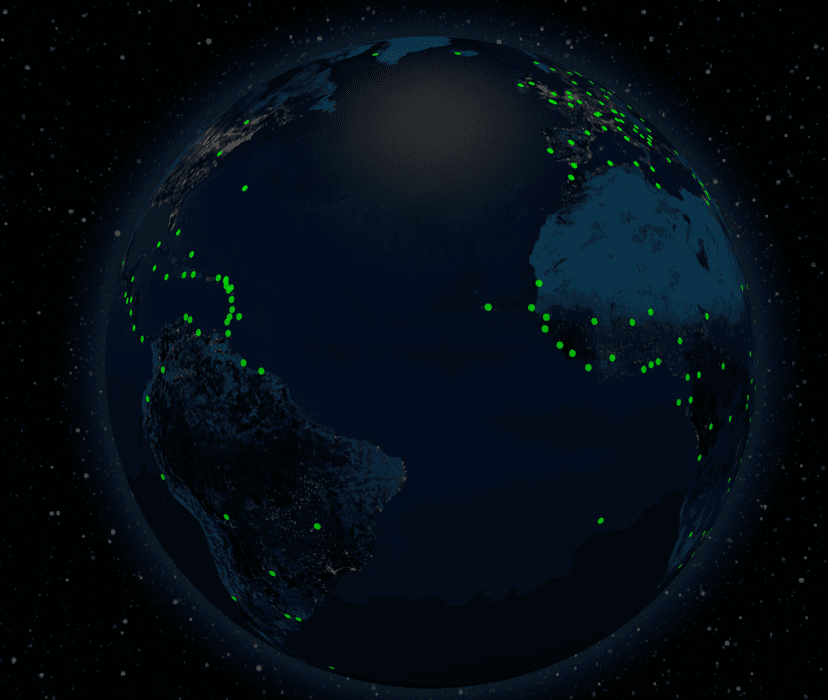
280+ Authorities. One Search.
Over 900 million records from official sources worldwide, organized under ISO-3166 country codes, filed by issuing authority and grouped into 16 risk categories, from sanctions to corporate registrations.
- ✓ 230+ countries and territories with data
- ✓ 40+ international organizations
- ✓ 8,500+ agencies, regulators and other issuing bodies
- ✓ 24,000+ official datasets, each collected on its source's schedule
Intelligence Solutions for Every Mission
Corporate due diligence across corporate registrations, politically exposed persons (PEPs), sanctions lists, regulatory enforcement and litigation. Find the officers, directors and related companies named in official records.
Research foreign ownership, control, or influence (FOCI) exposure and links to state-sponsored actors, using sanctions, export-control, political-influence and corporate records. For defense contractors and critical infrastructure.
AML and KYC screening against global sanctions lists, enforcement actions and regulatory databases, with batch screening and nightly monitoring. Supports BSA/AML compliance and OFAC sanctions screening.
Analyst Time, Reclaimed
ORCA AI HUNT gives investigators something even rarer than data: time. One search covers every dataset at once, and every result names the official list it came from, so analysts spend their hours applying judgment to matches instead of hunting for them.
Simple, Transparent Pricing
Choose the plan that fits your intelligence needs
Standard
For small and independent offices
- ✓ 100 prepaid searches
- ✓ Searches with no hits are free
- ✓ Base and Diligence Reports
- ✓ No subscription
Pro
or $10,000 a year (save $1,988)
- ✓ Single user license
- ✓ Unlimited searches
- ✓ Links to each official source
- ✓ Base and Diligence Reports
API & Teams
Priced to your volume and seats
- ✓ REST API
- ✓ AI assistants (Claude, Microsoft 365 Copilot)
- ✓ Multiple seats and single sign-on
- ✓ Dedicated account manager
Every new account starts with a 5-day demo • No setup fees
How ORCA AI HUNT Compares to Traditional Solutions
The difference lies in data quality, speed, and coverage.
| Capability | ORCA AI HUNT | Traditional Tools |
|---|---|---|
| Data Sources | 24,000+ official government and institutional datasets | Aggregated commercial databases |
| Investigation Speed | Seconds | Days to weeks |
| Geographic Coverage | 230+ countries and territories, plus 40+ international organizations | Limited coverage, mainly Western countries |
| Data Accuracy | Primary source; each dataset collected on its publisher’s schedule | Secondary sources, often outdated |
| Reviewing Matches | Ranked matches, each tied to its official record, with exclusions and notes | Long lists of name matches to clear by hand |
| Analyst Productivity | One search across every dataset; batch screening and nightly monitoring | Manual, time-intensive processes |
What is Deep Web Intelligence?
Deep web intelligence refers to information stored in databases, government repositories, and institutional sources that are not indexed by traditional search engines. It includes the most authoritative sources for corporate intelligence, compliance screening, and national security investigations. Deep web is not the dark web: ORCA AI HUNT uses only official and institutional publications, never breached, leaked or black-market data.
Geopolitical Risk and Great Power Competition
Politically Exposed Persons in Modern Geopolitics →
Understanding the insufficiency of FATF’s PEP definition in addressing modern geopolitical realities.
“Russia and China’s ability to degrade Western democratic institutions is dependent on influencing a broader spectrum of PEPs than currently mandated.”
The Privatization of Great Power Competition →
How America’s competitors have weaponized commercial activities in the gray zone.
“Hostile powers support their commercial activities with the full complement of instruments of national power.”
Reconsidering Great Power Competition Below Armed Conflict →
The challenges of attribution in modern subversion operations.
“…it is often difficult to attribute activities to the actual perpetrators – to identify the operational ultimate beneficial owners. Well-resourced disinformation campaigns camouflage diplomatic, military, and economic activities of adversaries that underpin strategically effective efforts orchestrated over generations.”
The Commercialization of Influence Operations →
Understanding the centrality of the private sector to Great Power Competition.
“…subversion campaigns almost invariably target and/or leverage the private sector. Subversion lives in the gaps and seams between government policy and private sector freedoms.”
Frequently Asked Questions
What is deep web intelligence?
Deep web intelligence refers to data stored in databases, government repositories, and institutional sources that are not indexed by traditional search engines like Google. ORCA AI HUNT collects 24,000+ datasets from government agencies, regulatory bodies, and official institutions in 230+ countries and territories, and makes them searchable in one place. Read the complete deep web intelligence guide.
How fast can ORCA AI HUNT complete an investigation?
A search returns results from all 24,000+ datasets in seconds, and a saved search becomes a formatted report in one click. Research that typically takes weeks of analyst time starts from a complete, source-cited picture, so analysts spend their time reviewing matches rather than finding them.
What types of organizations use ORCA AI HUNT?
ORCA AI HUNT serves financial institutions for AML compliance, government agencies for national security intelligence, corporations for due diligence and risk assessment, law firms for litigation support, and the OSINT community for unique selectors and pivots.
How does ORCA AI HUNT differ from traditional compliance tools?
Unlike traditional compliance databases that rely on aggregated commercial data, ORCA AI HUNT accesses primary source material directly from government agencies and official institutions. Every result names the official list it came from, so compliance teams can check a match against the source record before they rely on it.
What is the coverage of ORCA AI HUNT's data sources?
ORCA AI HUNT holds 900M+ records from 24,000+ datasets, published by 230+ countries and territories and 40+ international organizations, in 16 risk categories: sanctions, local and sector debarments, political exposure and influence, wanted persons, investigations and intelligence, regulatory enforcement, litigation, tax and bankruptcy, intellectual property, licenses, non-profits, assets, supply chain and trade, other pattern-of-life data, and corporate registrations. All data is organized under ISO-3166 country codes.
How does ORCA AI HUNT support FOCI compliance?
ORCA AI HUNT helps organizations detect foreign influence and ensure compliance with Foreign Ownership, Control, or Influence (FOCI) regulations by surfacing corporate registrations, officers and directors, government connections, and sanctions and export-control listings from official databases worldwide.
Ready to see what ORCA AI HUNT finds?
Request a DemoJoin Our Intelligence Mailing List
Curated insights and platform updates, straight to your email.